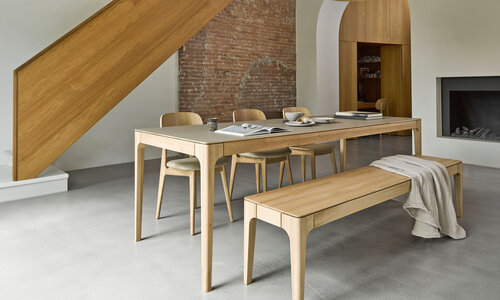
Combining wood types
Adding wood to your interior is always a good idea. But there are as many wood types as there are trees. So how do you choose the best wood for your wooden chair or wooden dining table? And how do you combine different wood types in a balanced way? If you’re losing track, these styling tips will help you get started.
Types of wood
Sav & Økse furniture is made from high-quality and durable wood types. You can choose from:
Oak
One of the most widely used wood types in Scandinavian interiors is oak. It’s a very strong wood with a distinctive grain pattern that makes it easy to work with. It can be lacquered, oiled, or smoked. Sav & Økse offers furniture in natural oak (lacquered or oiled) and oak whitewash.
Beech
Beech is a sturdy wood type, just like oak. It doesn’t splinter easily, making it popular for furniture making. It has a slightly reddish hue and darker markings. Beech brings a fresh and modern look to your interior.
Walnut
Walnut adds warmth and luxury to your interior and is also a favorite in mid-century modern spaces. The dark wood has a fine grain and beautiful pattern. Sav & Økse makes walnut tables, coffee tables, cabinets, and chairs.

Left: Rikke oak with whitewash finish combined with dark brown and light oak Enni chairs. Right: Junni oak chairs, Samt oak dining table paired with a walnut Tempelman sideboard.
Styling tips for combining wood types
If you already have a wooden floor or want to combine different wooden furniture pieces, aim for balance and cohesion. You can achieve this in several ways:
- Choose harmony or contrast
Too many wood tones in one space can look busy. To avoid this, choose a calm and harmonious color palette as your base. Go for light, neutral wall colors, for example. Or choose the same wood type for both table and chairs. Sav & Økse offers a wide selection of oak dining chairs that pair well with oak tables. Want more contrast? Add colorful accessories like cushions, throws, or vases. Combining a walnut table with an oak floor creates an interesting light–dark contrast.
- Match wood types by tone
If one piece is lacquered and another is untreated, match the wood by undertone. A beech table with a warm reddish undertone pairs less well with a light natural floor. Wood types with a similar grain structure also work well together. For example, try aligning the grain direction of a wooden coffee table with the direction of the wooden floor. And pay attention to placement: distribute wooden pieces evenly throughout the room for visual balance.
- Combine with other materials
You can create more cohesion between wood types by adding other materials and accessories. Metal (like steel doors), marble, or concrete can give the space an industrial or eclectic touch. Pair a marble countertop with wooden bar stools, such as our Silja wooden bar stool. For a more natural look, add materials like bamboo, felt, cotton, or linen. A rug helps blend different wood tones and visually separates, for example, a wooden coffee table from a wooden floor. Small wooden accents such as picture frames or sculptures help tie everything together.
- Less is more
Wood is beautiful, but too many different wood types can create a chaotic look. Choose a maximum of two or three wood types to maintain cohesion and calm.
- Request samples
To get a clear idea of how wood looks in your space, we recommend comparing samples. Place samples of all wood types (for furniture, flooring, and accessories) next to each other in the room. The light in your space can greatly influence how the wood tones appear.
Sav & Økse offers samples of all wood types. You can order them here.
You are also welcome in our showrooms. Follow us on Pinterest or Instagram for more inspiration.